Clay, Lovable, and GitLab teach the same hard lesson in different formats: public authority comes from making real work inspectable. Clay turns GTM workflows into Claybooks and systems posts. Lovable turns builder activity into launch surfaces, remixable patterns, docs, and public correction. GitLab turns operating knowledge into a public handbook with contribution paths.
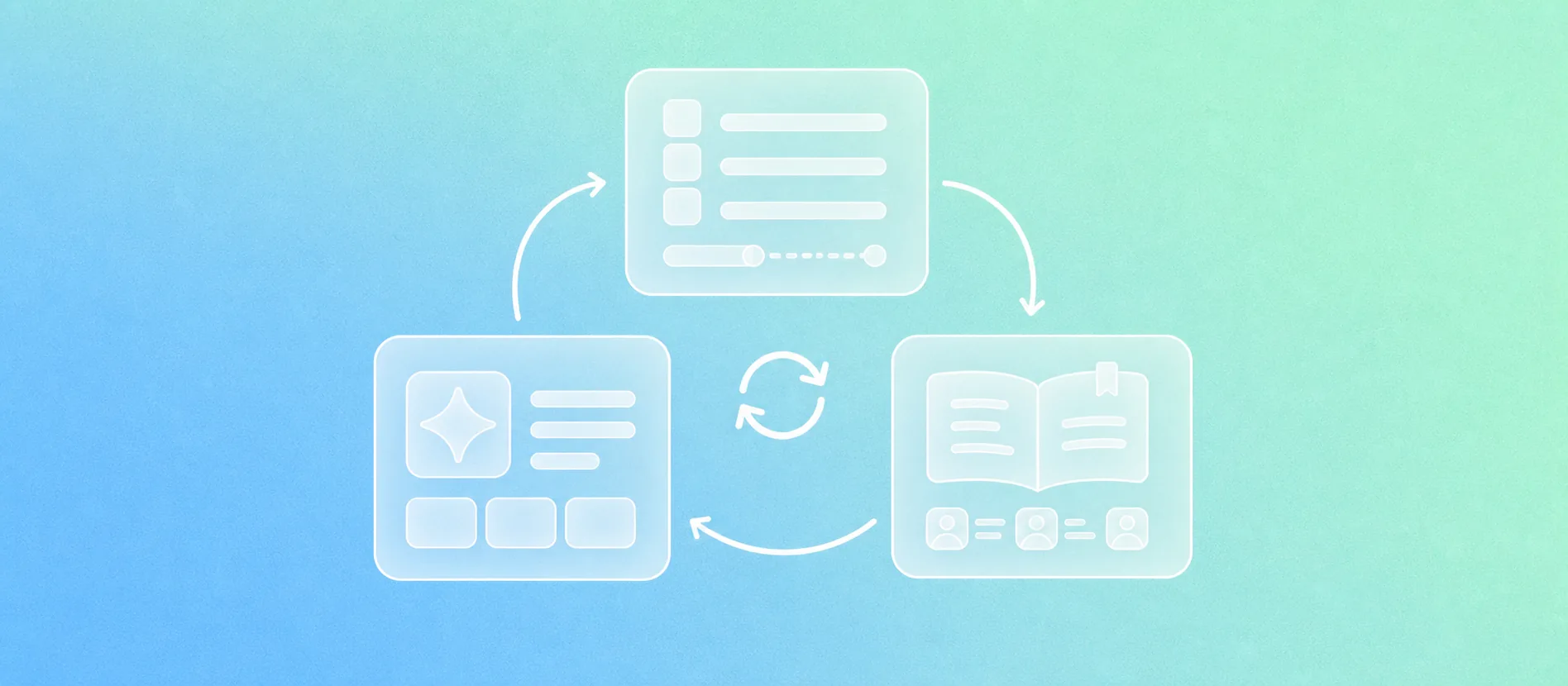
A public content loop starts with work the team is already doing, turns it into something useful outside the company, then lets audience questions, user behavior, corrections, or contributions shape the next version. B2B teams can publish the artifact, the context, and the feedback route.
The Loop Is The Asset
Clay, Lovable, and GitLab sit inside a broader field of employee-generated content examples. The bigger question for this post is what repeats behind their public artifacts.
Each company has a different surface. Clay publishes GTM workflows. Lovable publishes builder paths and product education. GitLab publishes company operating knowledge. The shared pattern is the loop: work becomes public, readers can inspect it, and the company has a visible route for updates or reuse.
In each case, the public artifact is tied to a visible workflow: Clay shows the sequence, Lovable shows the builder path, and GitLab shows the update process.
Clay Makes Workflows Reusable
Clay's public loop starts with a workflow someone can use. The Claybook for tracking job changes for customer champions names the use case, credits the community creator, lists what the workflow uses, links to a template, and explains the steps: import champions, monitor job changes, capture old and new company data, enrich the mover, and reach out with context.
The Claybook works better than a generic post about customer champions because the artifact carries the work. A sales or RevOps reader can inspect the trigger, the inputs, the tools, and the next action. The page also points to support paths, keeping the public workflow connected to the community and expert layer around Clay.
How Clay Uses Clay for SEO and AEO adds the second side of the loop. The company explains how its own growth team thinks about discoverability across search engines and answer engines, then describes the systems it built around that problem.
The lesson for a B2B revenue team is direct: turn the internal workflow into the public artifact. If a rep builds a useful account-research motion, publish the workflow. If RevOps builds a signal model, publish the decision logic. If marketing learns where buyers get confused, publish the operating system that fixed it.
Lovable Makes Builder Activity Visible
Lovable's loop is built around people making things in public. The Lovable Launched announcement introduced a place where builders could publish apps, get discovered, and collect votes. The page also tells builders to share launches on social channels and link back to the launch page.
The app is the artifact, the launch page is the distribution surface, and the social post brings the builder's own network into the loop. For a B2B team, this points to a simple move: make customer or user work visible in a place where others can inspect it.
Lovable's docs add the reuse layer. The quick-start page explains that users can remix an existing project when public remixing is enabled, while the project access page explains that public remixing lets someone copy the latest version without editing the original.
The April 2026 incident post shows the correction layer. Lovable publicly described what happened, said public project chat history and source code were no longer accessible to other users, and said public projects were being moved to private except for official remixable templates.
The public correction belongs in the same loop because the artifact changed. When public artifacts create risk, the company has to publish what changed. B2B teams can take that boundary seriously: show the useful work, keep sensitive access controlled, and make corrections visible when the public surface changes.
GitLab Makes Operating Knowledge Durable
GitLab's public loop is slower and more durable. The TeamOps shared reality page says public-by-default work requires clear rules for what is not public and creates a bias toward transparency across business functions. It also describes a knowledge system where people can view information across functions without waiting for access.
The handbook development page shows that the public handbook has a technical contribution path. It points readers to handbook editing guidance and the public handbook repository, which means the public artifact is backed by a real change process rather than a static culture page.
GitLab's communication page describes the handbook as the central repository for how the company runs and explains how to deprecate a Google Doc by moving content and linking to the new location, plus the related merge request or commit when applicable.
If a company wants public expertise to compound, the public knowledge base needs a home and an update path. A LinkedIn post can start attention, but a handbook, docs page, or blog archive gives the team a place to keep the work current.
What Revenue Teams Can Adapt
The pattern across the three companies starts with work close to customers, turns that work into a public artifact, and keeps a visible route for updates or reuse. A content calendar schedules posts; this loop generates the posts from decisions the team is already making.
| Company | Work source | Public artifact | Feedback route |
|---|---|---|---|
| Clay | GTM workflows and growth systems | Claybooks and systems posts | Templates, community creators, support paths, and expert help |
| Lovable | Builder activity and product usage | Launch pages, docs, remix paths, and public correction posts | Builder launches, remix behavior, access changes, and support docs |
| GitLab | Company operating practice | Public handbook pages | Repository edits, merge requests, and documented replacement paths |
For a B2B sales team, the smaller version starts with a weekly question: what did we learn from buyers that would help another buyer think more clearly? The answer might become a founder post, a rep's field note, a RevOps workflow, a customer-success pattern, or a public objection guide.
Clay's Claybooks give sales a concrete artifact to send after a discovery call. GitLab's handbook gives a buyer something to read before agreeing to a demo. The same logic can work for rep field notes, RevOps workflows, and buyer objection guides. The employee-generated content infrastructure hub and the sales-side post on LinkedIn content infrastructure for B2B sales cover the underlying system.
The Smallest Useful Version
Most teams shouldn't start by trying to become GitLab or Clay. Start with one loop your team can run for four weeks.
Pick one recurring source of expertise: sales calls, support tickets, product changelog notes, RevOps experiments, implementation lessons, or founder market notes. Publish one artifact per week that preserves the lesson. Track who reacts, replies, asks a follow-up, shares it internally, or uses it in a sales conversation.
Then update the next artifact based on what happened. That's the part most teams skip. The loop only works when the public response shapes the next public piece.
FAQ
What is a public content loop in B2B?
A public content loop is a repeatable system where real company work becomes public knowledge, then audience response or team learning shapes the next artifact. The output might be a LinkedIn post, template, handbook page, launch page, doc, or field note.
What can B2B teams learn from Clay, Lovable, and GitLab?
B2B teams can learn to publish real work in a form buyers can inspect. Clay shows reusable workflows, Lovable shows builder activity and remix paths, and GitLab shows durable operating knowledge.
Is this the same as employee-generated content?
It overlaps with employee-generated content when the public artifact carries the expertise of founders, employees, operators, or teams. The key distinction is that the asset should come from real work rather than redistributed company messaging.
Should every public artifact live on LinkedIn?
LinkedIn can create attention and conversation, but durable artifacts often need a home on the company site, docs, templates, or a handbook. The strongest loops connect social distribution to a public source of record.
What should a revenue team publish first?
Start with the work closest to a buyer decision: a sales objection, implementation lesson, RevOps workflow, buyer signal, or customer-success pattern. Publish the lesson in a format sales can reference in follow-up.
Sources
- Clay University: Signals: Track job changes for champions at existing customers.
- Clay: How Clay Uses Clay for SEO and AEO.
- Lovable: Announcing Lovable Launched.
- Lovable Documentation: Quick start.
- Lovable Documentation: Control project access.
- Lovable: Our response to the April 2026 incident.
- GitLab Handbook: Shared Reality.
- GitLab Handbook: Handbook Development.
- GitLab Handbook: GitLab Communication.
Ready to see whether LinkedIn can become a revenue channel?
Sell In Public captures your team's expertise, shapes it into LinkedIn posts and buyer signals, and runs outbound to the right ICP so your public loop turns into real sales conversations. Book a working session to find out whether LinkedIn can become a top revenue channel for your company.